
Good things come to those who wait
Good things come to those who wait
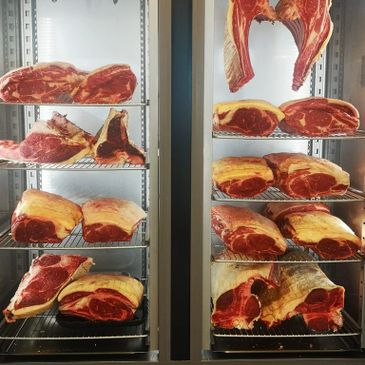
Dry ageing is one of the oldest known preparation techniques that requires time, patience, and attention to detail. It is a process that must not be rushed. The reward is unexpected nuances of flavour and changes in texture that make the meat unique. Dry aged meat may be as black as black pudding and hard as bread Crust on the outside, bu
Dry ageing is one of the oldest known preparation techniques that requires time, patience, and attention to detail. It is a process that must not be rushed. The reward is unexpected nuances of flavour and changes in texture that make the meat unique. Dry aged meat may be as black as black pudding and hard as bread Crust on the outside, but it has a true treasure of infinite tenderness on the inside.
The Process
Good things come to those who wait
As soon as you hang meat in the ager, a chemical process begins. Enzymes break down the tissue structures of the meat, a natural change that makes the meat particularly tender. These processes are primarily active in the first 96 hours, which is referred to as 'the tenderness phase' at the same time the meat losses moisture and the outer
As soon as you hang meat in the ager, a chemical process begins. Enzymes break down the tissue structures of the meat, a natural change that makes the meat particularly tender. These processes are primarily active in the first 96 hours, which is referred to as 'the tenderness phase' at the same time the meat losses moisture and the outer layers begin to dry out. These form a protective shell and protect the meat within. The loss of moisture intensifies the flavour. The longer the meat is stored, the fuller and more intensive the flavour, which is why we store our meat from 28-52 days! Which creates a flavour powerhouse without even a hint of metallic note.
The Final Product
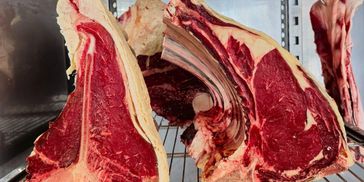
The Final Product
Finally the dark Crust is cut away, the meat is removed from the bone or cut into steaks and then can be prepared ready for your plate. The refined piece of meat has an intense aroma and a consistency that has nothing in common with a "normal" piece of meat. It's no wonder that dry aged beef is therefore considered "the premier class of steaks" by connoisseurs